
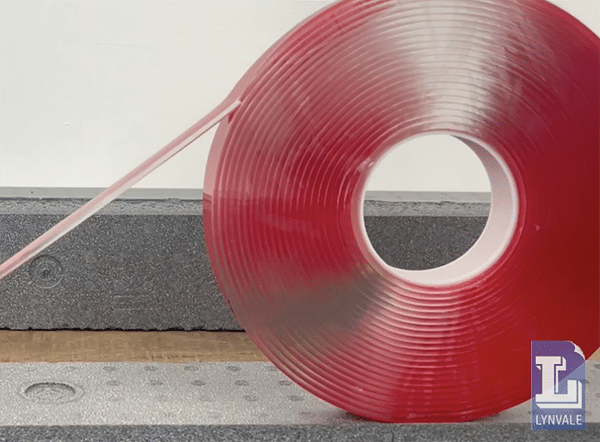
Airtightness at junctions and connections is one of the most consistently underperforming aspects of modern construction — and one of the most consequential. With Building Regulations Part L tightening and energy performance under increasing scrutiny, the way connections are sealed across the building envelope is no longer a peripheral detail. It’s a compliance issue.
Lynvale’s ACT (Acrylic Connection Tape) is designed specifically to address this.
The problem with junctions
A building envelope can be well insulated, well designed and well built — and still fail its airtightness test because of poorly sealed junctions. Connections between boards, around window and door frames, at penetrations and where different materials meet are the points where air leakage most commonly occurs.
These aren’t always large gaps. Even small, inconsistent seals at connections can accumulate into meaningful air leakage across a whole building — undermining energy performance, increasing condensation risk and, in some cases, preventing compliance with Part L targets.
The challenge is that these junctions can involve a wide variety of substrates — timber, CLT, light gauge steel, masonry, concrete, PVC and glass — often within the same building. A tape that works on one substrate may not perform equally well on another, while site conditions add further complexity.
What ACT does differently
ACT is an acrylic-based connection tape that seals and bonds in a single process, eliminating the need for separate adhesion and sealing steps and helping to save time on site without compromising performance.
Key performance characteristics:
Regulatory compliance — ACT is designed to support airtight construction in accordance with Part L requirements and is tested to DIN 4108-11, making it suitable for demanding airtightness and high-performance construction applications.
Substrate versatility — ACT bonds effectively to timber, CLT, light gauge steel (LGSF), masonry, concrete, PVC and glass, making it particularly useful for mixed-substrate junctions common in both retrofit and new-build construction.
Cold-weather performance — usable at temperatures down to -20°C, with frost resistance to -40°C, ACT can be applied in conditions that may rule out many alternative products. No drying time is required.
Movement resistance — buildings move. ACT offers resistance to dynamic shear and thermal movement, helping to maintain a permanently elastic seal across connections that expand, contract and settle over time.
Performance in humid conditions — particularly relevant for vapour control layer connections to concrete and other challenging substrates where moisture may be a factor during and after construction.
Where ACT is specified
ACT can be used across a wide range of connection and junction sealing applications throughout the building envelope:
- Board-to-board connections in timber and CLT construction
- Airtight sealing around window and door frames
- Glazing connections and curtain wall junctions
- Pipe and service penetrations through airtight layers
- Vapour control layer laps and connections to concrete substrates
- Junctions requiring a permanent, elastic and airtight seal
Designed to last
ACT is not intended as a temporary or interim solution. It is designed to maintain its performance over the lifetime of the building — important when the integrity of an airtight layer depends on every connection remaining sealed over the long term.
ACT is available on NBS Source, helping architects and designers incorporate the product into standard specification workflows.
If you’re working on a new-build or retrofit project and would like to understand whether ACT is suitable for your junction detailing requirements, get in touch with the Lynvale team.
