
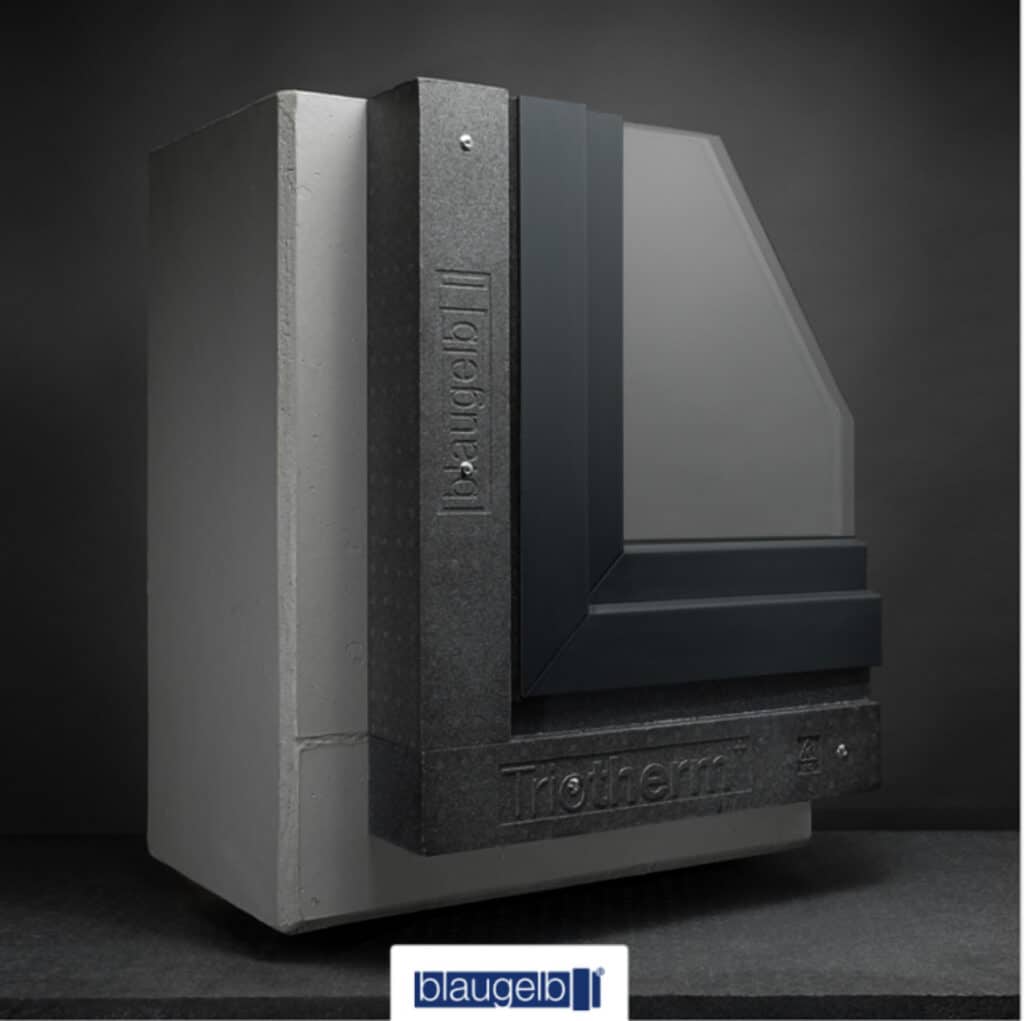
Window performance is about more than the U-value of the window itself. The thermal performance of the window-to-wall junction also matters. Where the window is positioned within the wall construction can have a significant effect on heat loss at the window-to-wall junction.
When a window is installed within or towards the insulation layer, the connection between the frame and the surrounding building envelope can be designed to provide better continuity of insulation and reduce thermal bridging.
This is particularly important in highly insulated buildings, where junction performance can become an increasingly significant part of overall heat loss.
Why does window position matter?
A window interrupts the surrounding wall construction. How the frame is positioned and connected therefore influences the thermal performance of the junction around the entire perimeter of the opening. Positioning the window further towards the insulation layer can help reduce the thermal bridge created at this interface. However, moving the window away from the structural wall also creates another challenge: the window still needs a secure and reliable method of support.What is thermal bridging at a window opening?
A thermal bridge occurs where heat can pass more readily through part of the building envelope than through the surrounding construction. Around windows and doors, this can occur where the insulation layer is interrupted or where the frame connects back to the structural wall. Because this heat loss occurs around the perimeter of the opening, it is commonly assessed as a linear thermal bridge and expressed as a Ψ-value (psi-value). The quality of the junction can therefore influence overall heat loss even when a high-performance window and wall construction have been specified. Poorly detailed junctions can also result in lower internal surface temperatures around the opening, increasing the risk of localised condensation and mould growth.Moving the window into the insulation layer
One way of improving the thermal performance of the window-to-wall junction is to position the window within, or closer to, the insulation layer rather than fixing it entirely within the structural opening. This can improve continuity between the wall insulation and the window frame, helping to reduce heat flow around the perimeter of the opening. However, projecting the window beyond the face of the structural wall introduces an important practical consideration: the window requires a support system capable of transferring loads safely back to the building structure.How Triotherm+ supports pre-wall window installation
Triotherm+ is a pre-wall installation system designed to create a structural mounting frame outside the structural opening, allowing windows and doors to be positioned within the insulation zone. The profiles are fixed back to the structure to create a stable installation frame around the opening. This provides a defined fixing position for the window while allowing the surrounding insulation layer to continue more effectively around the frame.Thermal performance is only part of the junction
Moving the window into the insulation layer can improve the thermal design of the junction, but positioning alone does not create a complete high-performance installation. The connection between the window, Triotherm+ frame and surrounding building envelope must also maintain continuity of the airtight layer and provide appropriate protection against moisture and external weather conditions. This means considering the window-to-wall junction as a complete system rather than treating structural support, insulation and sealing as separate details.Creating a continuous airtight connection
Once the window has been installed within the Triotherm+ frame, suitable sealing tapes can be used to connect the installation back into the building’s airtightness and weatherproofing layers. Lynvale provides a range of sealing solutions for these interfaces, allowing the sealing strategy to be selected according to the wall construction, window position and required internal and external connection.What are the advantages of pre-wall window installation?
Where the building design allows the window to be positioned within the insulation zone, a pre-wall installation system can help address several aspects of the window-to-wall junction:- Reduced thermal bridging by improving the relationship between the window frame and surrounding insulation layer
- Improved insulation continuity around the perimeter of the opening
- Structural support for windows and doors positioned outside the face of the structural wall
- A defined installation plane that provides a consistent fixing position around the opening
- Better integration of sealing layers by allowing airtightness and weatherproofing connections to be considered as part of the complete junction
